
Origins of the HD Holden
In February 1965, following the success of the best-selling EH Holden, the controversial HD Holden made its debut. In stark contrast to the more conservative EH, the HD Holden showcased a bold new styling direction. It featured a complete re-paneling, wraparound tail-lights, a large, swept-back windshield, and a concave rear windshield. For the first time, all the windows were curved. The HD was also significantly wider and longer than the EH, providing noticeably more passenger and cargo space.
Holden referred to the HD's flowing design as 'Space Curve' styling. This was during an exhilarating time of the space race to the moon, which influenced automotive design with a 'flying-saucer' aesthetic. The wide guards and wheels tucked neatly beneath gave the illusion that the car was hovering in space, rather than simply rolling on conventional wheels and tires.
The flanks of the Holden HD featured sharp-edged front guards aimed at enhancing the car's perceived size. However, these 'kidney scoops' ultimately contributed to the car's decline, as an influential figure began to label them as unsafe.
Many have humorously proposed that HD signifies 'Horribly Designed' or 'Holden's Disaster.' The controversial sharp guards generated a wave of negative reactions, prompting their eventual elimination. However, research revealed that the main problem was not the shape of the front guard, but rather the curvature of the side panels. This ultimately led to the final HD model rolling off the production line in April 1966.


.png)
HD Holden - Record Setting Car
In May 1965, GM-H announced that Holden achieved its highest sales month ever, with over 19,000 HD units sold in just 31 days - a record that remains unmatched by any car in Australia.
In August 1965, GM-H revealed another milestone, reporting that HD sales exceeded 88,000 in the first six months. This was a significant leap compared to EK sales at 59,520, EJ sales at 61,448, and EH sales at 79,206.
Within just 14 months, nearly 180,000 HD Holdens were sold, setting an Australian record that is unlikely to be surpassed.

Launched in February 1965, the Holden HD made an immediate impact, redefining expectations for Australian luxury and space. Despite initial stylistic debates, the public response was overwhelming, driving record-breaking sales and solidifying the HD's place in automotive history.
The Grand Unveiling
1965

Original HD Holden Sales Brochure
Models



Sedan
The HD Holden introduced a wider "Space Curve" design and the powerful X2 engine option. The sedan lineup included:
-
Standard: The basic, no-frills entry model designed for economy and fleet use.
-
Special: The popular mid-range choice, featuring upgraded trim and interior comfort.
-
Premier: The luxury flagship, equipped with a 179 engine, bucket seats, and a center console.
Wagon
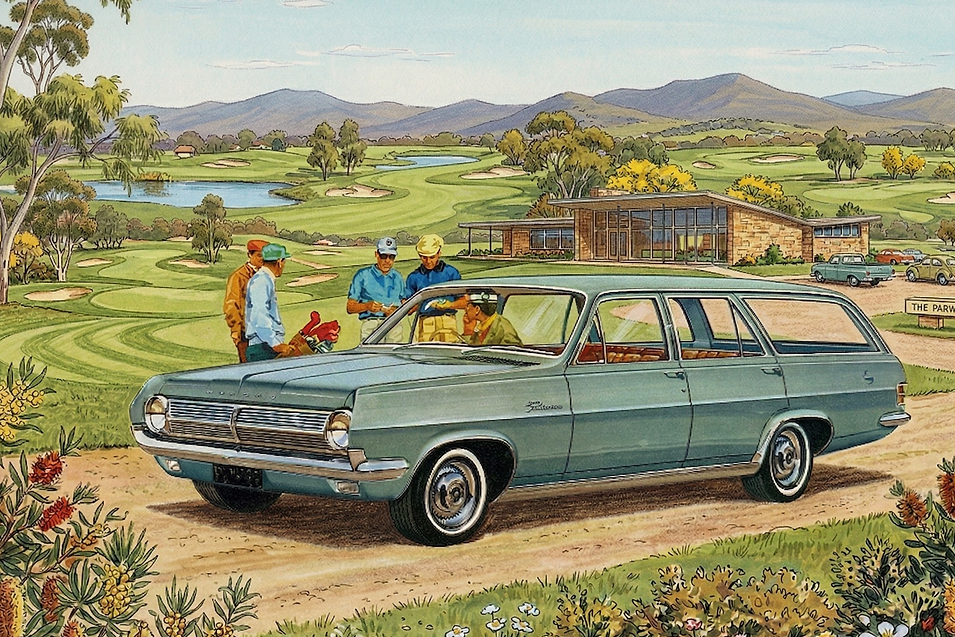
The HD Holden Station Wagon offered a massive 71.5 cubic feet of cargo space and a fold-down rear seat, maintaining the same three trim levels as the sedan:
-
Standard: A rugged utility version with a basic interior, popular for trade and commercial use.
-
Special: The family favorite, blending extra cargo room with better trim and "Special" badged styling.
-
Premier: The top-tier luxury wagon, featuring the 179 engine, plush "Ambla" upholstery, and full carpeting.
Panel Van
The HD Holden Panel Van was the range’s dedicated workhorse, featuring a high-roof design and a split rear tailgate for commercial utility.
Unlike the sedans or wagons, the van was offered only in a basic Standard trim. It prioritized durability and cargo space, though buyers could still upgrade to the more powerful 179 engine or heavy-duty suspension for tougher jobs.
Utility
The HD Holden Utility combined the passenger car's "Space Curve" styling with a rugged rear tray for a 1,000lb (approx. 450kg) payload capacity.
Similar to the panel van, the ute was only available in a single, basic trim level. It featured a durable vinyl interior and a steel-ribbed load bed, though it could be optioned with the 179 engine and Powerglide automatic for those wanting a more capable "gentleman’s" work vehicle.